













OCD Therapy for Children in Richmond Hill
Is your child stuck in repetitive behaviors or thoughts? Let’s help them break free and find calm.

 For a child with OCD, a worry does not always pass on its own. They may feel driven to wash, check, repeat, count, or ask for reassurance until things feel “right,” even when part of them knows the ritual does not make sense.
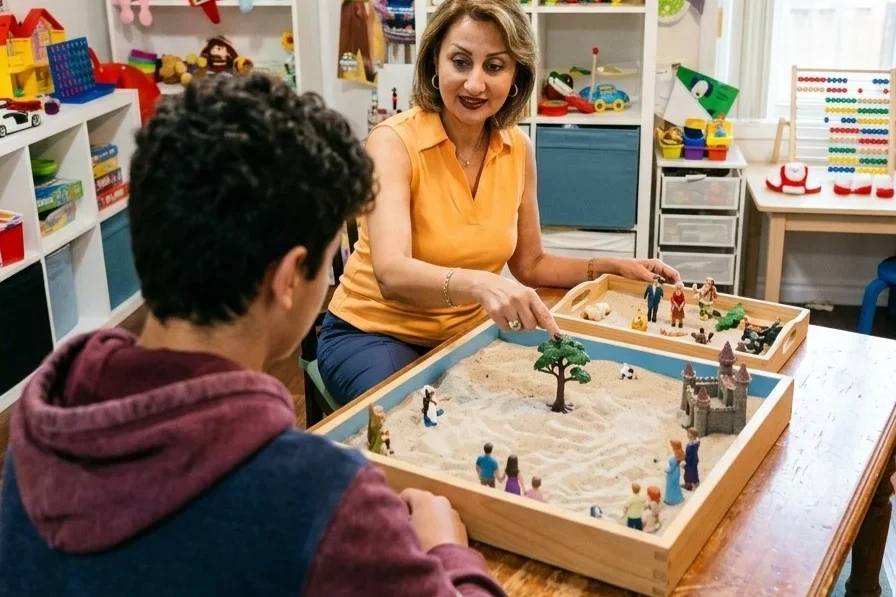
At Alpha Child Therapy, OCD therapy in Richmond Hill helps children understand the cycle between intrusive thoughts, anxiety, and compulsions. Shiva Movafaghian, a Child and Youth Therapist and certified play therapist, uses ERP, CBT-based strategies, solution-focused work, and parent coaching to help children respond to OCD in new ways.
What Is Obsessive-Compulsive Disorder (OCD)?
OCD involves unwanted thoughts, images, or urges called obsessions and repeated behaviours or mental rituals called compulsions. These rituals may bring brief relief, but the anxiety often returns and keeps the cycle going.
Signs and Symptoms of OCD in Children
OCD can be easy to miss because children may hide rituals or feel embarrassed by their thoughts. Parents may first notice that ordinary routines are taking much longer or causing unusual distress.
Common Obsessions in Children
Intrusive thoughts in children may centre on germs, illness, making a mistake, harm coming to someone they love, or needing things to feel “just right.”
Common Compulsive Behaviours
Compulsive behaviours in children may include excessive washing, checking, counting, arranging objects, repeating actions or words, mental rituals, or asking the same reassurance questions again and again.
Emotional and Behavioural Signs Parents Should Watch For
Children may become upset when a ritual is interrupted, avoid certain places or activities, or spend a long time getting ready or completing schoolwork.
How OCD Can Affect a Child’s Daily Life
When OCD takes up more time, it can interfere with school, friendships, family routines, and a child's self-confidence.
Impact on School Performance
Repeated checking, rereading, rewriting, or fear of mistakes can make homework and tests exhausting and affect concentration.
Impact on Friendships and Social Activities
Children may avoid playdates, sports, sleepovers, or other activities because of fears, rituals, or embarrassment about their symptoms.
Impact on Family Relationships
Parents and siblings can gradually become involved in reassurance or rituals. OCD counselling helps families support the child without unintentionally reinforcing the OCD cycle.
What Causes OCD in Children?
There is no single known cause of OCD. Research points to a combination of genetic and biological factors, while stress can influence when symptoms become more noticeable.
Genetic Factors: OCD can run in families, but having a relative with OCD does not mean a child will necessarily develop it.
Brain Function and Neurobiology: Research has found differences in brain networks involved in behaviour, emotional responses, and obsessive-compulsive symptoms.
Environmental and Stress-Related Triggers: Stressful events do not necessarily cause OCD, but symptoms can become stronger during periods of change or emotional strain.
Evidence-Based OCD Therapy in Richmond Hill
Child OCD therapy at Alpha Child Therapy draws on ERP, CBT, solution-focused strategies, and parent support. Treatment is adapted to the child's age, symptoms, and readiness to work with anxiety.
Exposure and Response Prevention (ERP)
ERP therapy for OCD helps children face feared situations in small, planned steps while resisting the urge to complete a ritual. It starts with manageable challenges rather than the child's hardest fear.
Cognitive Behavioural Therapy (CBT)
CBT for OCD helps children understand the link between thoughts, anxiety, and compulsions. They practise responding differently when OCD sends an intrusive or frightening thought.
Parent Involvement and Family Support
Parents play an important role in OCD counselling for children. Shiva helps families reduce reassurance patterns, respond calmly to distress, and support skills practised in therapy.
Developing Healthy Coping Strategies
Children learn ways to handle uncertainty and intrusive thoughts without relying on compulsions. Solution-focused work also helps them notice progress and build on small successes.
Child OCD Therapy: What to Expect
Pediatric OCD treatment is structured but still paced around what the child can manage. Children are included in the process so they understand what they are practising and why.
Initial Assessment
Early sessions focus on understanding obsessions, compulsions, triggers, routines, and how OCD is affecting life at home or school.
Creating a Personalized Treatment Plan
Together, therapy goals are identified and ERP steps are introduced gradually. The plan may also include CBT strategies, parent coaching, and strengths-based work.
Tracking Progress and Building Resilience
Progress is reviewed as children practise responding differently to obsessive thoughts and compulsive urges. The plan can be adjusted as new situations become easier to manage.
When Should You Seek Professional OCD Counselling?
Consider speaking with an OCD therapist when repetitive thoughts or rituals cause distress, take up significant time, or interfere with school, sleep, friendships, or family life. OCD can also occur alongside anxiety, so it is important to look at the child's broader emotional needs.
Benefits of Working With an OCD Therapist
Reducing Anxiety and Distress: Children practise facing triggers without depending on rituals for relief.
Managing Intrusive Thoughts: Therapy helps children understand that having a thought does not mean they need to act on it.
Improving Confidence and Independence: As rituals become less controlling, children can take part more freely in school, relationships, and everyday routines.
Why Families Choose Our OCD Therapy Services in Richmond Hill
Shiva combines ERP and CBT-based strategies with a warm, child-focused approach and parent collaboration. Families can access OCD therapy in person at 147 Oxford Street in Richmond Hill or online.
- Evidence-based OCD treatment: ERP and CBT guide the therapeutic work.
- Child-focused approach: Strategies are explained in ways children can understand and practise.
- Parent collaboration: Families learn how to support progress without feeding reassurance cycles.
- In-person and virtual sessions: Richmond Hill and online appointments are available.
- Individualized treatment plans: Sessions focus on the child's specific triggers, routines, and goals.
Frequently Asked Questions
Online Courses & Tools

Solutions for Sleeping Disorders
Getting a good night’s sleep is essential for both children and parents. In this episode, we discuss common sleep disturbances in children and explore the science behind sleep disorders. […]
FREE

SOS Help for Emotions: Managing Anxiety
SOS Help for Emotions – Managing Anxiety, Anger, And Depression is a self-help book that is fun to listen to and easy to apply. […]
FREE

Children's Anxiety
Anxiety in children can be subtle yet deeply disruptive—affecting their emotional development, school performance, and relationships. This comprehensive course, […]
$149.99