









Play Therapy for Kids in Richmond Hill
Long before children can explain what is bothering them, they show it. A worry becomes a stomachache before school, grief turns into a meltdown over the wrong cup, a hard change at home shows up as hitting or shutting down. Play is how children make sense of all of it, and play therapy turns that natural language into a safe, guided way for your child to work through what they cannot yet put into words.
What Is Play Therapy?
Play therapy is a recognized, evidence-based approach where a trained therapist uses play to help children express feelings, process difficult experiences, and build healthier ways of coping. Put simply, play therapy is to children what talk therapy is to adults. A child who cannot say “I feel pushed aside since the new baby arrived” can show it in the playroom, and from there we gently help them understand and move through it. It works because it meets children where they already are, with no pressure to sit still and explain themselves.
How Play Therapy Helps Children
Play therapy supports children by helping them:
- Regulate big emotions and settle more easily
- Ease anxiety, worry, and emotional overwhelm
- Work through behaviour challenges and frequent outbursts
- Build problem-solving skills and resilience
- Strengthen social skills and friendships
- Rebuild confidence and a kinder view of themselves
Signs Your Child May Benefit From Play Therapy
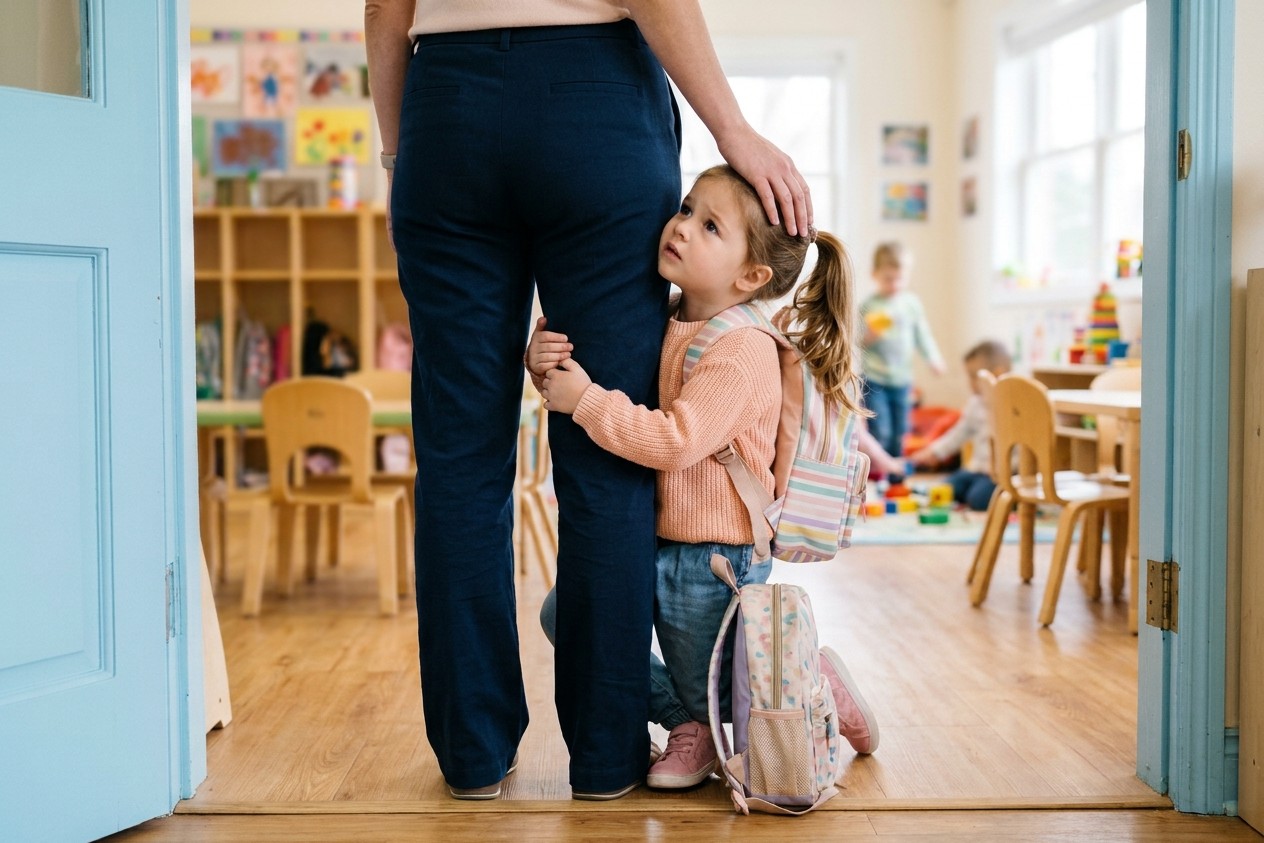
Play therapy is often a good fit when a child shows big emotions that seem too large for the moment, worry or clinginess that gets in the way of daily life, changes after a hard event such as a move, divorce, loss, or new sibling, trouble making or keeping friends, rising aggression or defiance, or going quiet and withdrawn. You do not need a diagnosis or a crisis to begin. If your instinct says something is off, that is reason enough to reach out.
What Happens in a Play Therapy Session
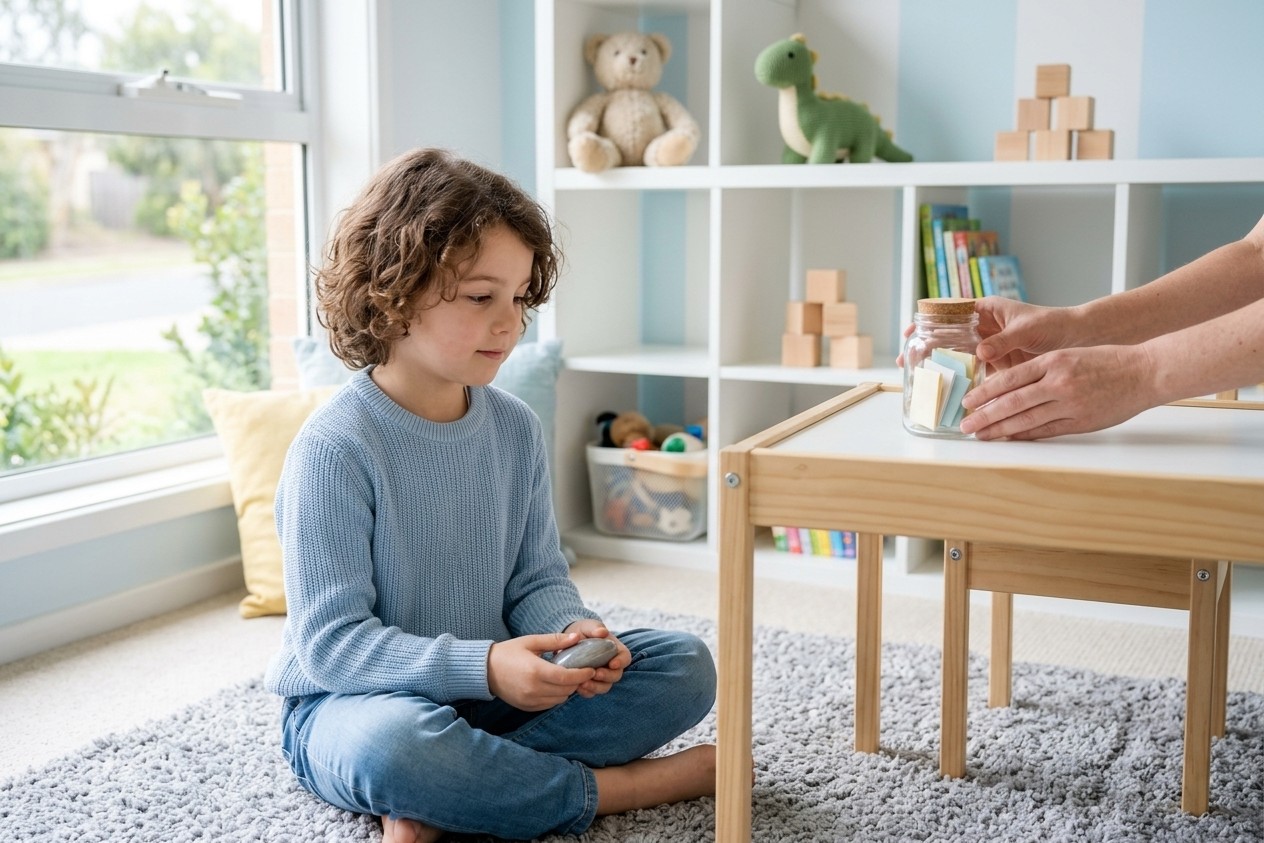
We begin with an online consultation for parents only, so we can understand your child, hear your concerns, and talk through what you are hoping for before your child starts. From the next session, your child comes into the playroom. What looks like ordinary playing is carefully guided: the therapist watches for themes and meaning in the play, then helps your child build new skills and a new story about themselves. Every child progresses at their own pace, and sessions never force it.
Types of Play Therapy Techniques We Use
Different children open up through different mediums, so the playroom gives them options:
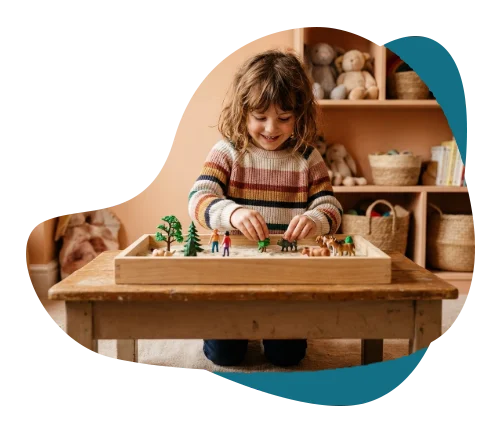
- Sand tray and miniatures, where a child builds a small world that safely shows what is going on inside, especially helpful for children who find it hard to talk
- Art and drawing, to put feelings on paper when words are too much
- Puppets and figures, which create safe distance so a child can voice hard things through a character
- Storytelling and role-play, to rehearse real situations and try out braver responses
Directive and Non-Directive Play Therapy
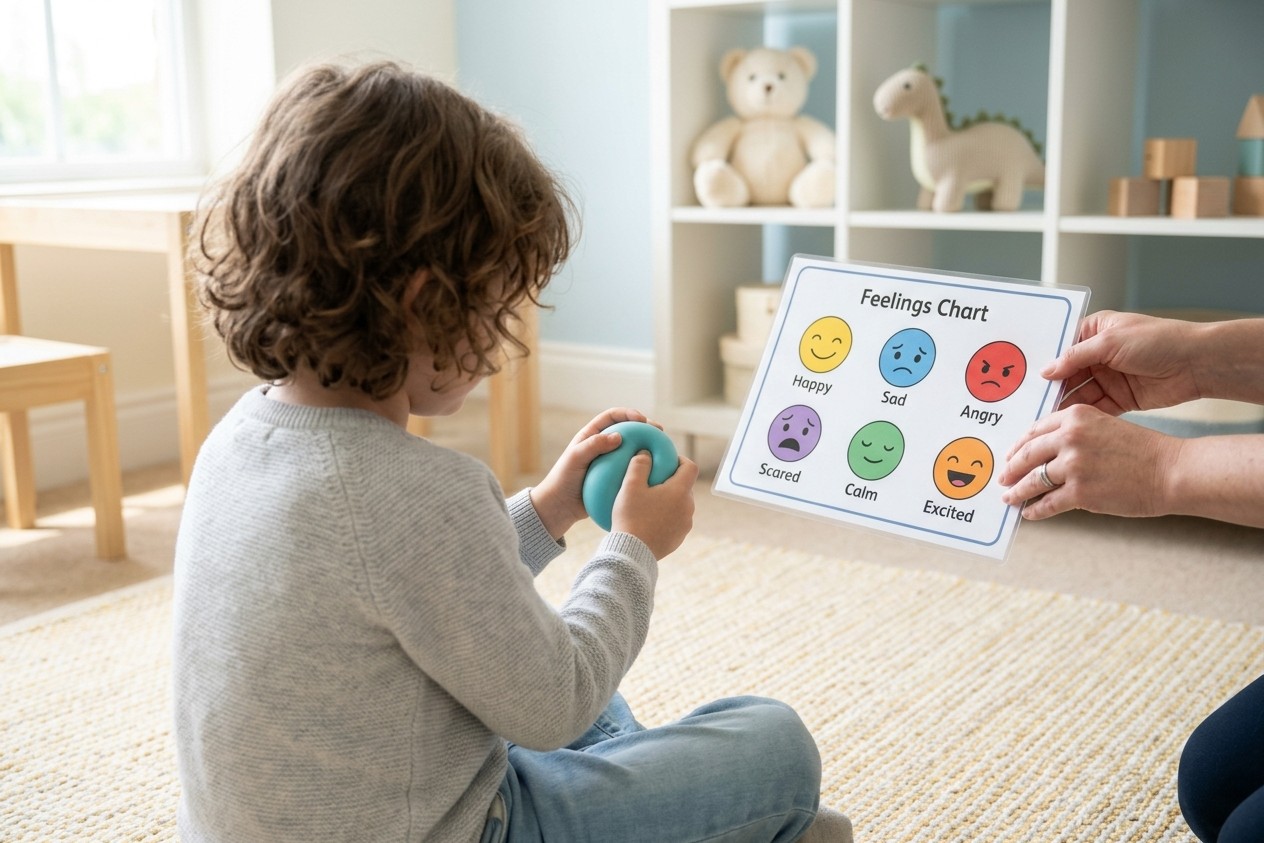
We use both approaches and tailor the balance to your child. In non-directive, child-centred play therapy, your child leads while the therapist follows and reflects back what they notice, which builds trust and lets feelings surface naturally. In directive play therapy, the therapist introduces a specific activity aimed at a goal, such as practising how to calm a big feeling or handle a tricky social moment. Most children benefit from a blend of the two.
Play Therapy for Anxiety, Trauma, and Behaviour
Play therapy is especially helpful for the challenges that are hardest for a child to talk about. For anxiety, it gives worried children a way to externalize fears and practise coping. For trauma and loss, the distance of play lets a child process painful experiences safely and at their own pace. For behaviour challenges, including defiance, aggression, and difficulties linked to focus or autism-related needs, it helps uncover what is driving the behaviour and build steadier responses in its place.
What Age Is Play Therapy For?
Play therapy fits children from toddlers through about age twelve, when play is their main way of communicating. The approach flexes with the child: younger kids lean on imaginative and sand play, while older children, up to around age fifteen, move toward art, games, and more talk-based work.
The Role of Parents in Play Therapy
Play therapy is not something that happens to your child behind a closed door while you wait. We meet with you regularly to share what we are seeing, explain what the play is telling us within the bounds of your child’s trust, and talk through ways to support the same growth at home. Sessions are also available in Farsi for parents who prefer it.
Why Choose Alpha Child Therapy for Play Therapy in Richmond Hill
Play therapy is only as helpful as the person guiding it, because untrained “just playing” is not therapy. Sessions are led by Shiva Movafaghian, a certified play therapist with more than 20 years of experience in child and youth development. Our approach is child-centred, grounded in evidence, and warm enough that children feel at ease coming back. Sessions are held in person at our Richmond Hill office, with online options also available.
Book a Free Play Therapy Consultation
The simplest first step is a free 15-minute consultation. Tell us a little about your child and what has been happening, and we will talk through whether play therapy is the right fit, with no pressure. Call (647) 677-8790 or book your free consultation online.
Online Courses & Tools

Solutions for Sleeping Disorders
Getting a good night’s sleep is essential for both children and parents. In this episode, we discuss common sleep disturbances in children and explore the science behind sleep disorders. […]
FREE

SOS Help for Emotions: Managing Anxiety
SOS Help for Emotions – Managing Anxiety, Anger, And Depression is a self-help book that is fun to listen to and easy to apply. […]
FREE

Children's Anxiety
Anxiety in children can be subtle yet deeply disruptive—affecting their emotional development, school performance, and relationships. This comprehensive course, […]
$149.99