




Signs of Test Anxiety in Teens & How Play Therapy Helps
November 16, 2026
Autism Masking in Children: What Parents Should Know
November 24, 2026
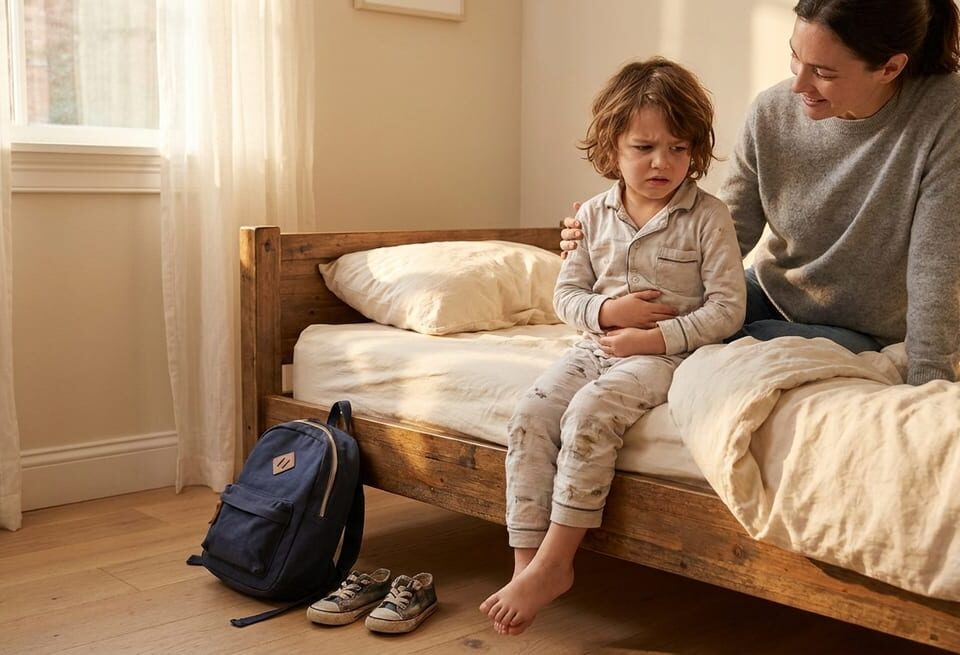
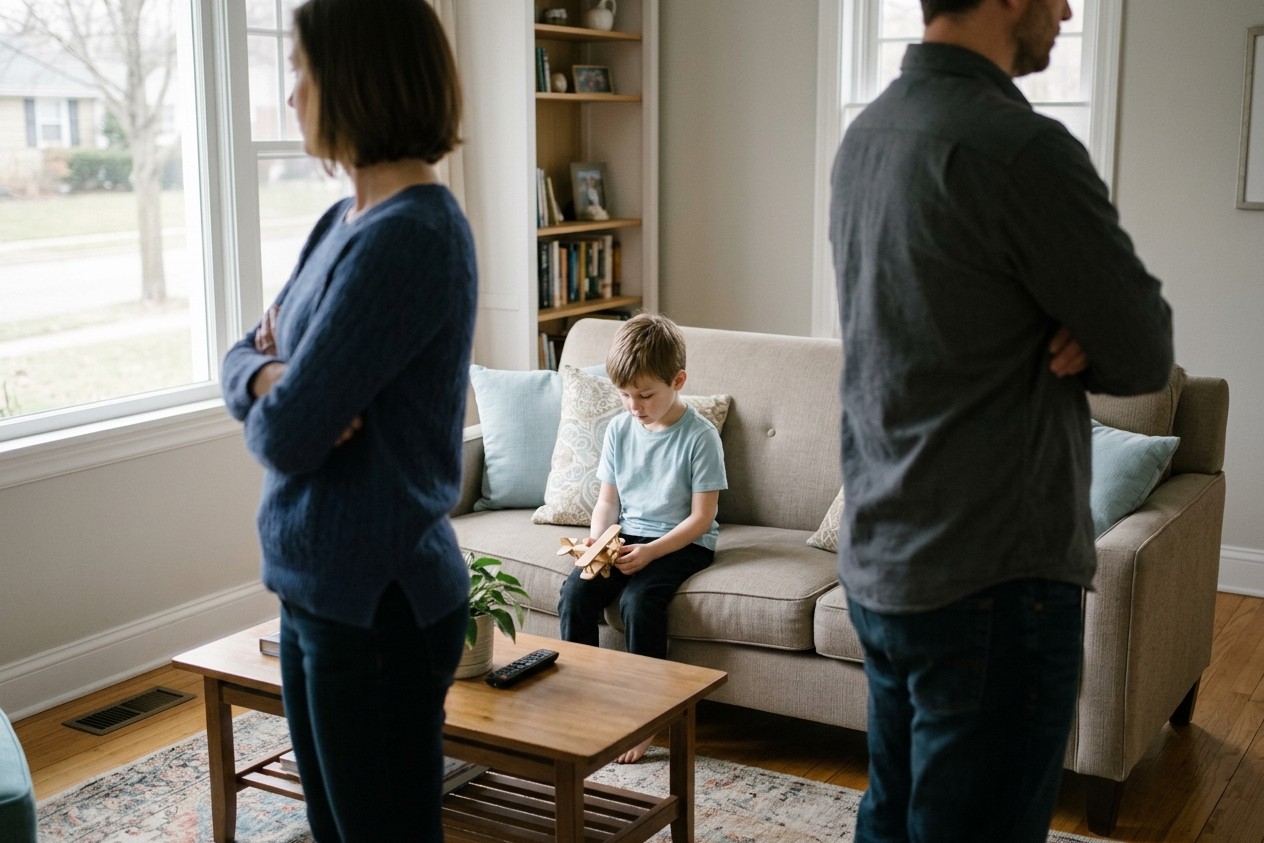
The teacher says your child had a great day. Forty minutes later your child is screaming on the kitchen floor, and that gap is what play therapy works on. The trigger was the wrong cup. Those two facts are not in conflict. The second one is usually caused by the first.
What After-School Restraint Collapse Means
After-school restraint collapse describes a child who manages the demands of the school day reasonably well and then releases everything they held in once they are home. The term was coined by Andrea Loewen Nair, a counsellor and parenting educator based in London, Ontario, and it spread through parenting media rather than through clinical research. Psychology Today is explicit on one point that matters for parents: it is not a medical diagnosis. That does not make it imaginary. Kelly Melistas, a child and adolescent psychologist at Henry Ford Health, describes it as a pattern where a child seems to manage school relatively well but experiences significant emotional disruption or dysregulation on getting home. The simplest way to read your child’s behaviour is as a sentence: I kept it together all day, and I cannot do it for another minute.
What the Collapse Looks Like in the First Hour at Home
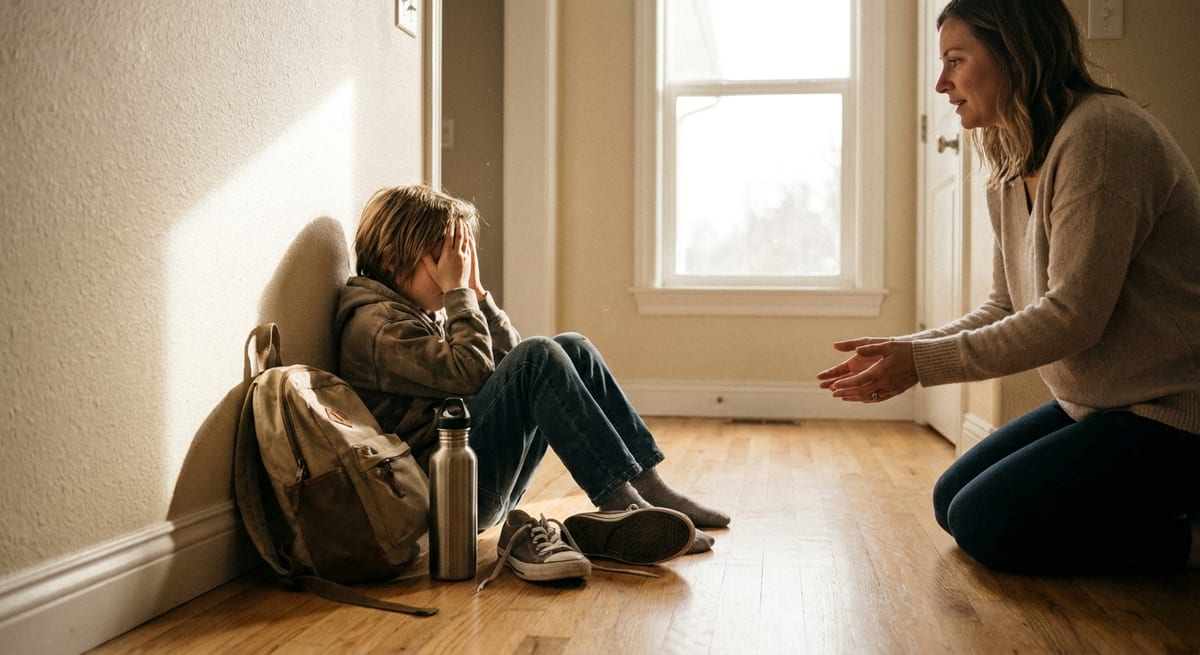
The shape families describe is consistent. There is a holding period, usually the school day. There is a release point, usually the car, the front door, or the first twenty minutes inside. Then there is a recovery, which families often describe arriving within an hour or two, after which the child seems like themselves again. The release itself varies more than most parents expect, and the quiet version is routinely missed. The outward version looks like shouting, crying over something small, door slamming, throwing things, refusing every request, or targeting a sibling. The inward version looks like flatness, going silent, lying on the floor, needing to sleep immediately, or being physically present and completely unreachable. Both are the same event. If your child is the quiet type, you may have spent years assuming they were fine after school.
Why the Meltdown Lands at Home and Not at School
Self-regulation is finite, and the school day spends almost all of it. Through six hours a child sits still, waits their turn, manages noise and transitions, reads social rules, suppresses the urge to move or talk, and holds back frustration. Understood describes the collapse as what happens when that held-in emotion is finally released, and notes it usually happens where children feel safest. This is the part worth sitting with. The meltdown arrives at home because home is the safe place. It is a sign of trust, not a sign that your parenting is the weak point in your child’s day. Psychology Today adds a necessary balance: it is important to understand the behaviour, but not to excuse it. What follows is not permission for anything, it is a change in what you ask for in the first hour.
Children More Likely to Fall Apart After School
Understood notes that restraint collapse can happen to any child. It is more pronounced in some. Melistas explains that children with diagnoses such as ADHD, autism or anxiety often spend a great deal of cognitive energy managing their attention, their impulses, social expectations and the sensory input coming at them all day. For an autistic child the effort frequently involves masking, which is the active suppression of natural ways of moving, communicating and regulating in order to fit in. Our article on autism masking in children covers what that costs and how to recognize it, and the after-school crash is one of its most reliable signals. One practical note for families using medication: Understood distinguishes restraint collapse from ADHD medication rebound, which can also occur in the late afternoon. If the timing tracks the dose rather than the school day, raise it with your prescriber.
Anxious Children Who Stay Quiet and Compliant All Day
The children who worry teachers least are often working hardest. An anxious child who spends the day scanning for mistakes, staying quiet to avoid attention and monitoring whether anyone is upset with them has done a full day of invisible labour. So has the child who is excluded at lunch and says nothing about it. Because no adult at school flagged a problem, nobody connects the 4 p.m. collapse to the 11 a.m. lunch hour.
An After-School Routine That Softens the Collapse
Reduce demands before you ask for anything. Melistas recommends setting aside 30 to 60 minutes for the transition rather than moving straight into homework or chores. What works in most households:
- Meet basic needs first. A snack and a drink before conversation, because hunger and thirst make the collapse steeper.
- Hold your questions. Do not ask how the day went at the door. Many children become overwhelmed by questions immediately after school.
- Say less. Psychology Today suggests simply smiling at your child when they arrive.
- Build a predictable landing. The same sequence every day: snack, change clothes, quiet or physical time, then homework at a set hour.
- Delay homework by at least an hour where the school allows it.
- Allow movement. Physical activity discharges held tension faster than talking does.
- Discuss the incident later. Do not reason with a child mid-collapse. Wait until they are calm, rested and fed.
Expect it to be worse in September and after holidays, when new routines and expectations are still being absorbed, and worse on days with substitute teachers, assemblies or tests. One caution from Understood: restraint collapse cannot always be avoided. A good routine reduces how big it gets and how long it lasts, not whether it happens.
Restraint Collapse or an Anger Management Problem
The difference is where, when, and whether it resolves. Restraint collapse is bounded. It happens at home, in a predictable window after school, it eases within an hour or two, and your child returns to baseline. Teachers report nothing unusual. A broader difficulty with emotional regulation does not respect that boundary. It appears at school and at friends’ houses as well as at home, it fires at any hour, it does not resolve on its own, and it is starting to damage friendships or leave marks on people and property. If your child’s outbursts look like the second description, anger management support addresses something different from a transition routine, and it is worth assessing properly. One more reason not to punish the collapse itself: a child who is punished for it tends to learn to hold it in for longer, which means more holding, not less.
How Play Therapy and Parent Coaching Help After-School Meltdowns
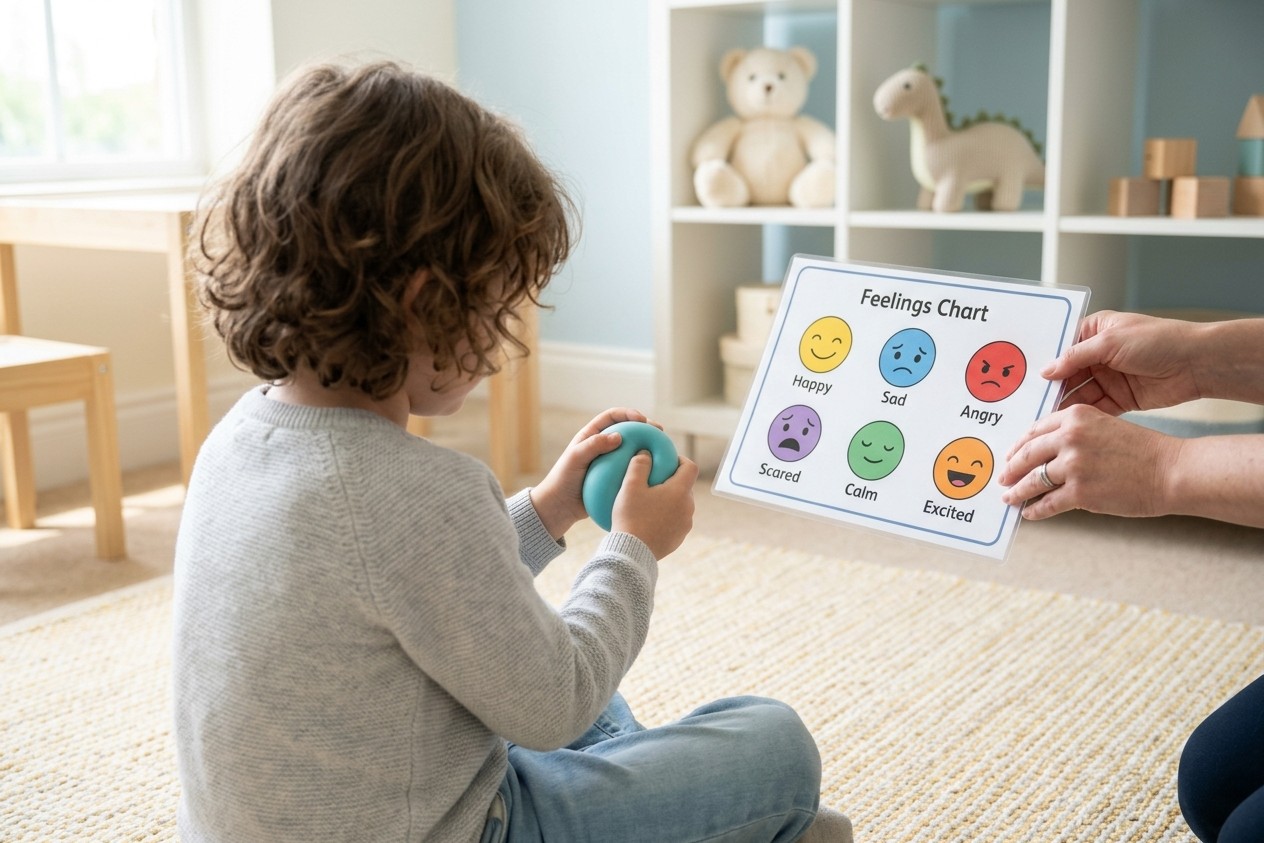
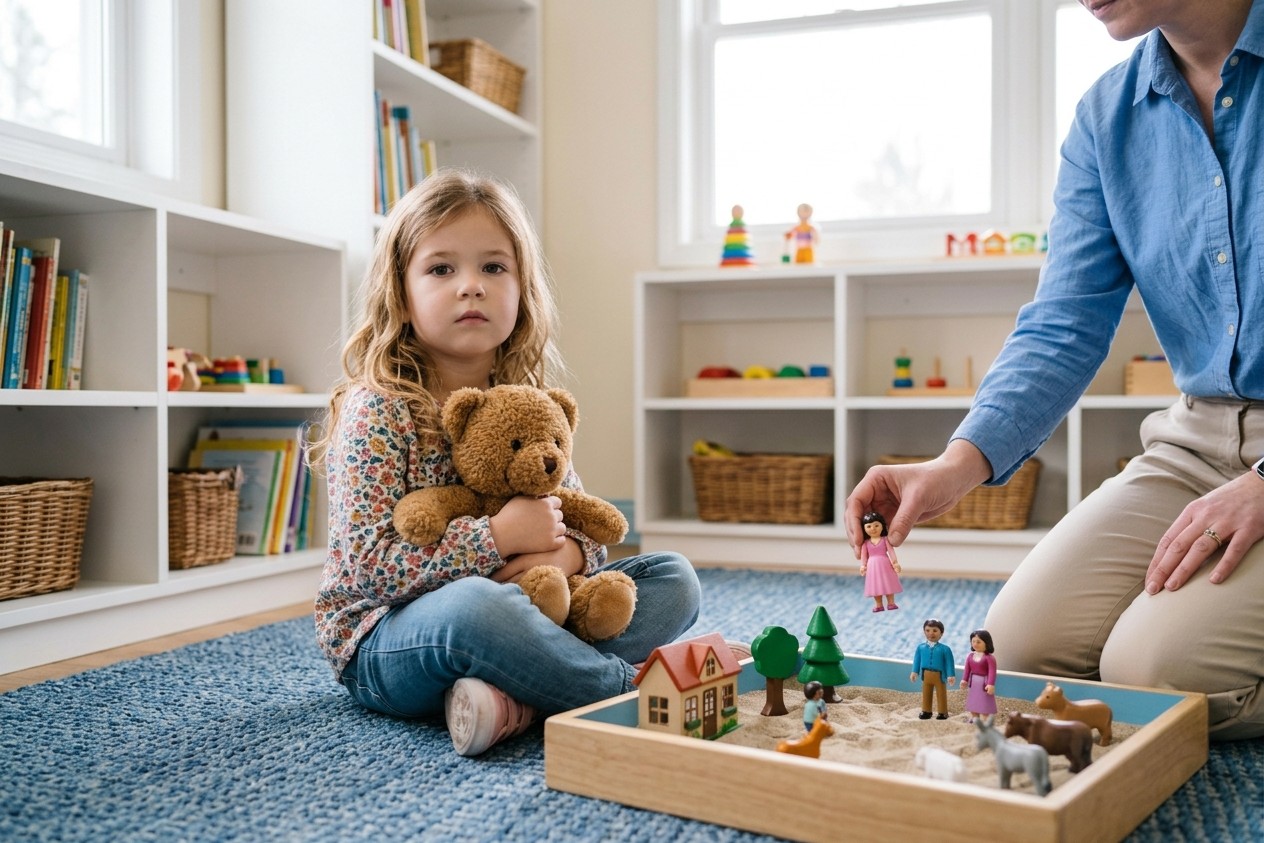
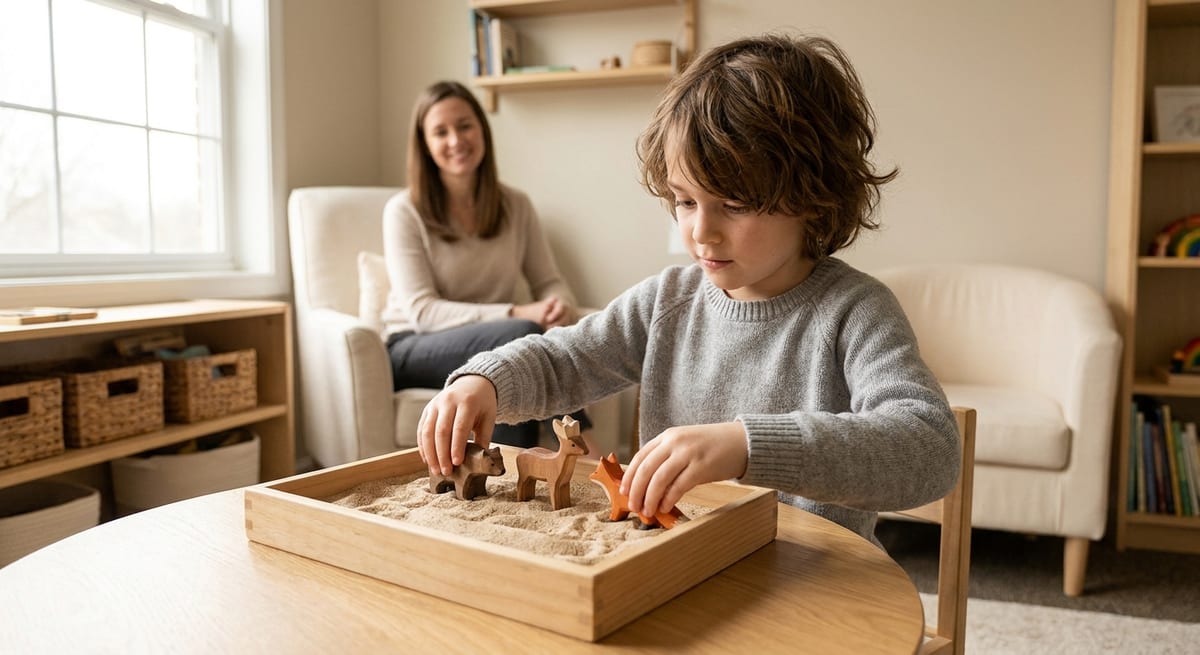
Two things usually need work at once, which is why families often do both. Play therapy gives a child a way to process the day that does not depend on explaining it. Younger children in particular cannot answer “what was hard at school today,” but they can show it through play, and a therapist can use that to build their capacity to regulate before the pressure reaches breaking point. Parent coaching works on the hour you are actually struggling with. Every child is different, and Melistas suggests asking your own child what they need in order to reset after school. Coaching turns those answers into a routine that holds on the bad days, and it covers the part nobody talks about: what to do with your own frustration when you are the one absorbing the collapse every afternoon. Where the collapse is daily, severe, lasting well beyond a couple of hours, or showing up alongside school avoidance, a free 15-minute consultation is the quickest way to find out whether something underneath it needs attention.
Frequently Asked Questions
Is after-school restraint collapse a real diagnosis?
No. It is a descriptive term coined by counsellor and parenting educator Andrea Loewen Nair, not a clinical diagnosis, and Psychology Today states this directly. Clinicians use it because it describes a pattern families report consistently. What sits underneath it, such as ADHD, autism or an anxiety disorder, can be diagnosed.
Is restraint collapse the same as a tantrum?
No. A tantrum is goal-directed behaviour aimed at getting something. Restraint collapse sits at the meltdown end, where a child has run out of regulation capacity and is not in a position to negotiate. That is why consequences and reasoning do not work during it, and why reducing demands does.
How long does an after-school collapse last?
Families commonly describe recovery within an hour or two, after which the child seems themselves again. A collapse that regularly runs all evening, or one your child does not recover from before bed, is worth discussing with a child therapist.
Why is my child fine at school but not at home?
Because home is where they feel safe enough to stop performing. Children hold in frustration where there are rules, expectations and an audience, and release it where they trust the response. The school report and your living room are not contradicting each other.
Is restraint collapse a sign something is wrong at school?
Not necessarily. Understood notes it does not mean something went wrong at school. A regular daily collapse is still worth investigating, because for some children it reflects unmet needs during the day: sensory overload, an undiagnosed learning difficulty, social exclusion, or anxiety nobody has noticed. Ask the school what the hardest part of the day looks like, rather than whether your child behaved well.