
After-School Restraint Collapse: Why Kids Melt Down at Home
November 18, 2026
School Refusal in Kids: Causes and Therapy That Helps
November 24, 2026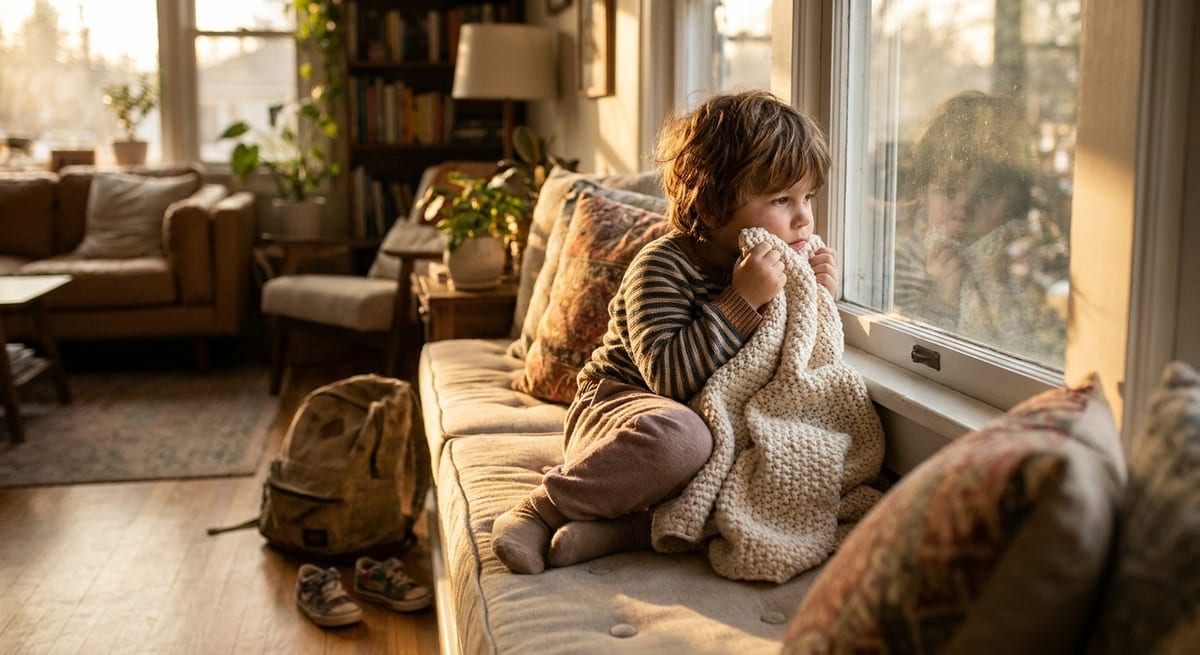
Every report says your child is doing well. Settled, polite, no concerns. That gap between school and home is where autism spectrum support starts. You know a different child: the one who comes through the door silent, cannot manage one more request, and falls apart over nothing by five o’clock. Both versions are accurate. One of them is costing your child a great deal to produce.
What Masking Means for an Autistic Child
Masking, also called camouflaging, is the conscious or unconscious hiding of a child’s natural ways of communicating, regulating and behaving in order to fit in, avoid judgement or reduce the risk of rejection. In practice it looks like forcing eye contact that feels uncomfortable, holding back stimming such as hand flapping or rocking, rehearsing scripts before a conversation, copying classmates’ speech and expressions, laughing at jokes they did not understand, staying quiet to avoid saying the wrong thing, and hiding sensory discomfort until they reach somewhere safe. Two corrections are worth holding onto. Masking does not mean a child is less autistic: they are hiding traits from others while still experiencing them internally. And it is not usually a decision. Many children learn it by imitation, early, without anyone teaching them and without being able to describe it.
Masking Signs Parents See at Home After School
There is no single sign. What parents notice is a change, usually after a new school, a new year, or rising social demands. The pattern most often described:
- Exhaustion that arrives with them at the door, sometimes needing sleep straight away
- More irritability, meltdowns or shutdowns at home than before
- A sharply increased need for alone time and silence
- Visible distress or flatness after social events they appeared to enjoy
- Suppressing stimming in public and expressing it freely at home
- Rehearsed or scripted language with people outside the family
- Anxiety in the days before social events
- Reluctance to talk about their day at all
- Self-critical statements about being weird or bad at being normal
- Avoiding social events while clearly wanting friends
- Seeming like a different child on weekends, holidays and school breaks
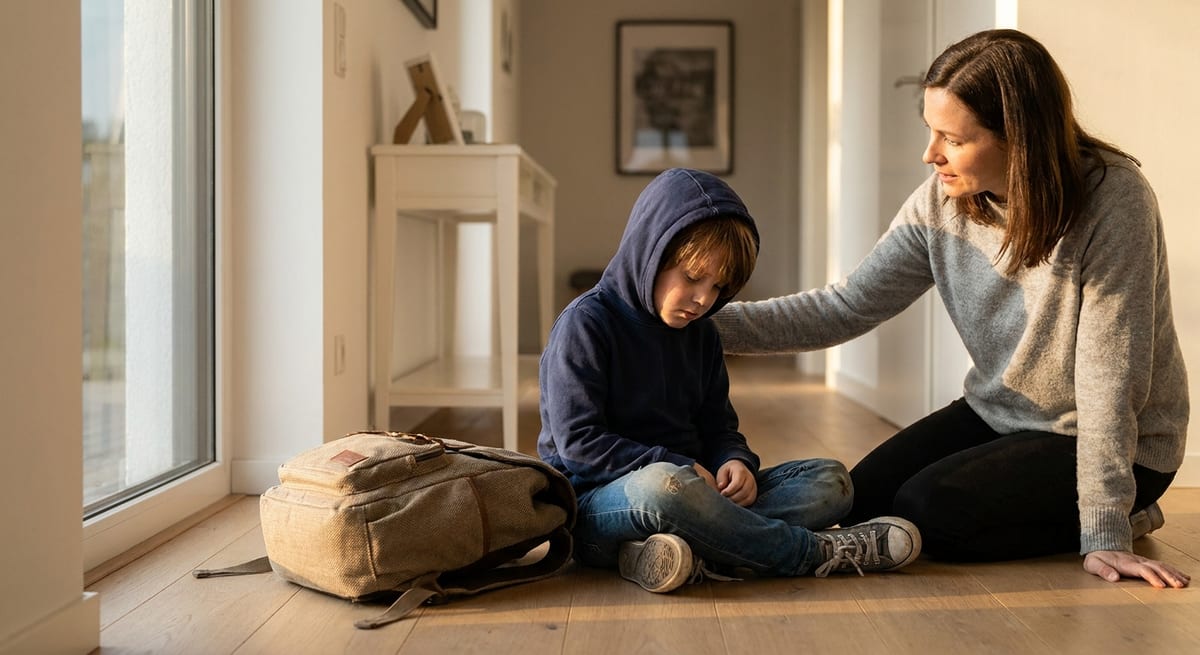
One behaviour on its own does not identify masking, and it does not indicate autism. What matters is the pattern across settings and over time. The crash itself has its own name, and if the after-school hour is where you see all of this, our article on after-school restraint collapse covers the routines that reduce it.
Why Teachers and Parents Describe Two Different Children
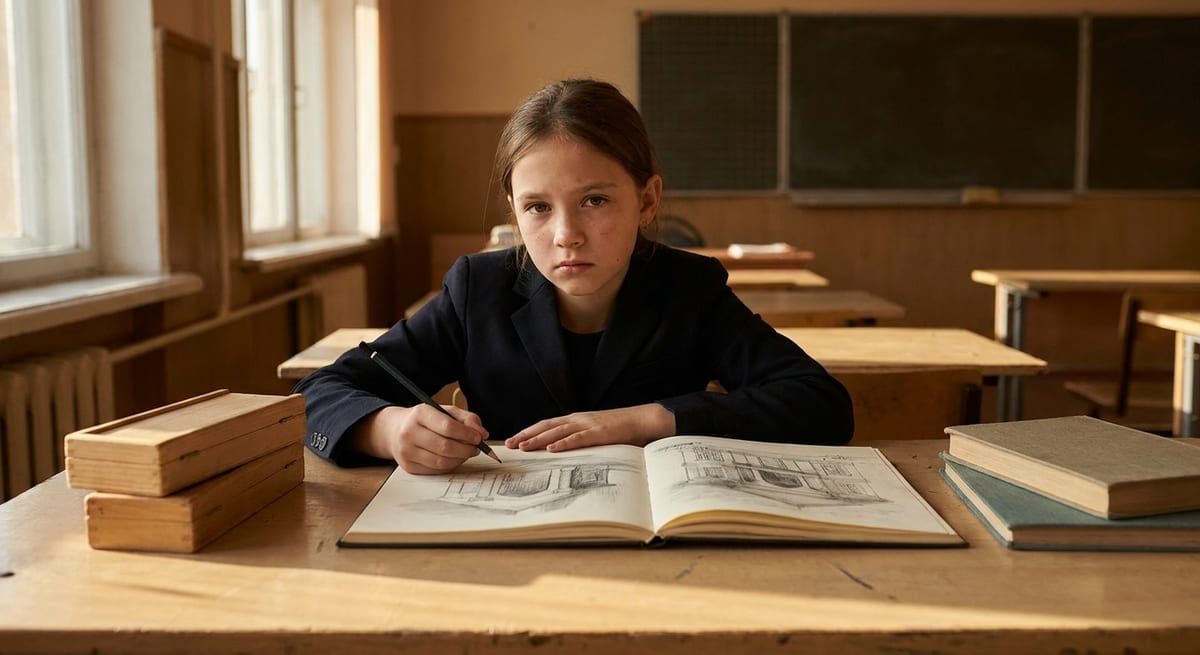
Because they are seeing different ends of the same effort. The National Autistic Society describes the disconnect between public functioning and private distress as one of the most telling signs of masking, and notes that clinicians need to assess that gap rather than rely on what is observable in a clinical room. This is the single most useful thing a parent can take from this article. If what the school reports and what you see at home do not match, the mismatch is itself the information. It is not a sign that you are overreacting or that your child behaves badly only for you. Children who mask well get described as well behaved, mature, a model student, or no trouble at all. None of those descriptions rule out an autistic child working very hard to produce them.
Girls, High-Achieving Kids and Late Autism Diagnosis
Masking can delay recognition for years, and it does so unevenly. Research consistently finds that girls and children assigned female at birth mask more, which contributes to under-recognition and later diagnosis, and women and girls who mask effectively are especially likely to be identified in adulthood. Masking also tends to intensify as social awareness grows, particularly around middle school, and in children who are socially motivated and want friendships. Academic achievement hides it further. A child who scores well and causes no disruption is unlikely to be referred, whatever is happening internally. Where attention difficulties are also present the same concealment applies, which is why our ADHD page and this discussion often come up in the same conversation. A study using photographs and interviews with autistic children aged 10 to 14, reported by Strides ABA, found that children as young as 10 were masking, and that they described it as stressful, confusing and effortful to maintain.
The Cost of Long-Term Masking: Burnout, Anxiety and Lost Confidence
Sustained masking is expensive, and the bill arrives later. Prolonged masking may contribute to anxiety, exhaustion, sensory overload, reduced self-esteem and autistic burnout. The flags clinicians watch for are sustained after-school crashes, rising anxiety, increasing exhaustion, and signs of burnout such as profound tiredness, loss of skills a child previously had, and emotional shutdown. Low mood matters too: persistent sadness, hopelessness, or dropping activities they used to love. There is a quieter cost as well. A child who spends years learning that their natural self is unacceptable arrives at adolescence with that belief intact, which is why confidence work is often part of the picture rather than an optional extra.
Supporting a Child Without Teaching More Masking
Lowering Demands at Home and in the Classroom
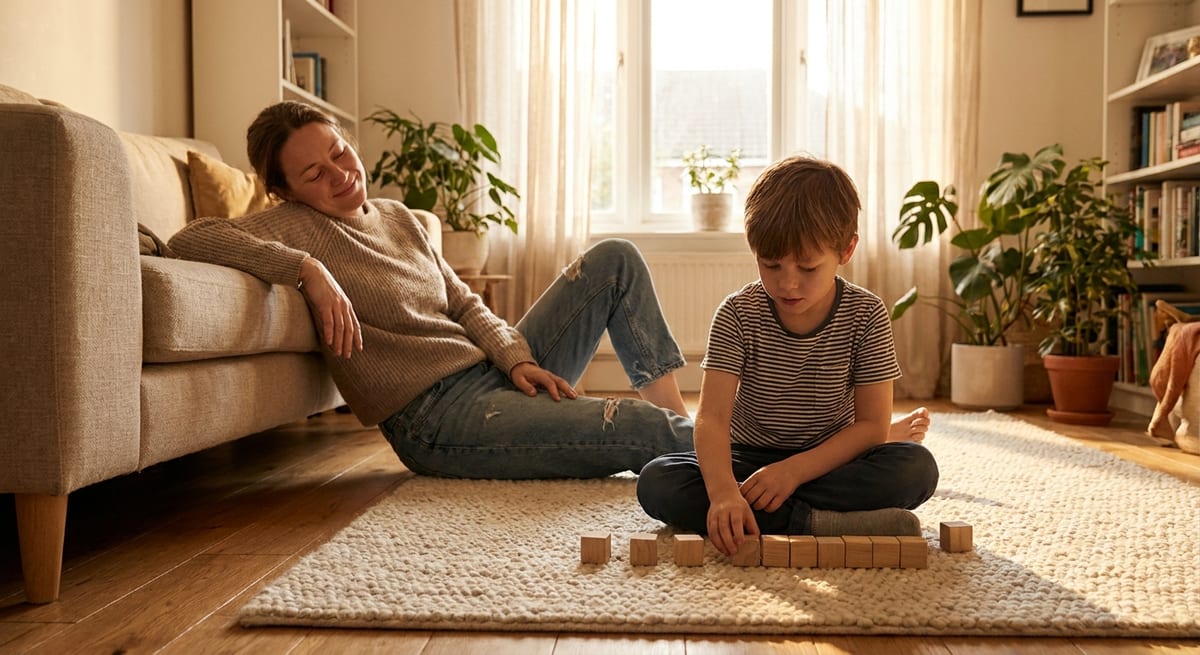
The goal is not to help your child mask better. It is to reduce how much masking the day requires. At home that means protecting genuine decompression time instead of filling it, allowing stimming freely, holding back the questions when they walk in, keeping the house quieter after school, and not treating the collapse as misbehaviour. At school it means asking for specific supports rather than general awareness: predictable routines, visual supports, permission to leave a noisy room, a quiet space at lunch, movement breaks, and reducing how much your child has to hold in their memory at once. The most important shift is in the question you ask. Instead of asking whether your child appears to be coping, ask what coping is costing them.
Autism Spectrum Therapy and Parent Coaching Options
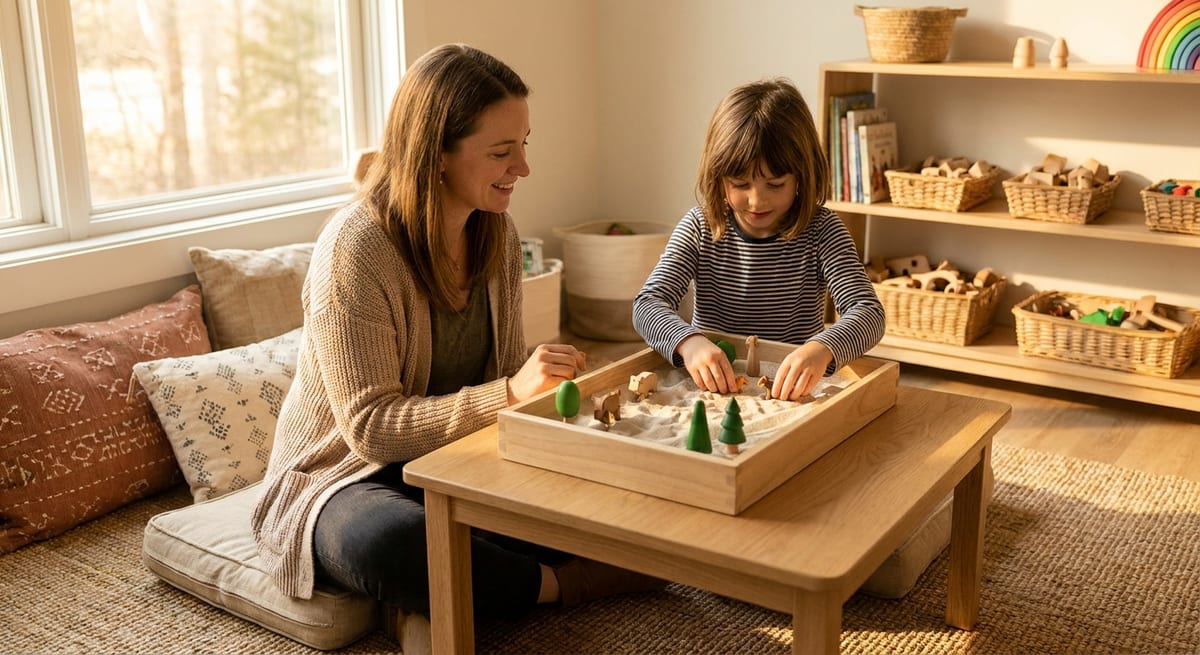
Autism spectrum support that takes masking seriously works on regulation and self-understanding rather than on better performance. For younger children play therapy is often the route in, because it does not require a child to explain in words what they have been holding all day. Parent coaching covers the rest: how to raise the school mismatch with teachers and get it taken seriously, what to put in place at home, and how to respond when your child is unreachable. If a diagnosis is still an open question, a free 15-minute consultation is the place to start.
Frequently Asked Questions
Does masking mean my child is less autistic?
No. Masking changes what other people see, not what your child experiences. An autistic child can hide their traits from teachers and peers while still living with the same sensory sensitivities, social effort and need for predictability.
Can a child mask without knowing it?
Yes. Masking can be conscious or unconscious, and many children learn it early by copying peers in order to navigate friendships, without any awareness of what they are doing or any vocabulary for it. Some children only recognize it years later.
Can masking delay an autism diagnosis?
Yes, and this is one of its most significant consequences. Masking can make autistic traits far less visible to teachers, clinicians and family members, and it affects girls and high-masking children most. Where parent reports and school reports disagree, masking should be considered rather than dismissed.
Is masking the same as good social skills?
No. Social skills are tools a child can use when they choose to. Masking is the suppression of their natural self in order to be accepted, and it runs continuously whether or not they want it. A child can learn social skills without being taught to erase themselves, and that distinction should shape any support you agree to.
Should I ask my child to stop masking?
Not as an instruction. Masking is often protective, and in some environments a child drops it only when it is safe to. The useful work is making home somewhere masking is not needed, reducing what school demands, and letting your child decide where they feel safe enough to stop. Pushing a child to unmask in an environment that has not changed removes the protection without removing the pressure.